By Lorcan Mekitarian, Chair of the Cleaning & Hygiene Suppliers Association
In the cleaning and hygiene supply chain, trust plays a central role. Buyers depend on suppliers’ claims about performance, quantity, safety and increasingly sustainability. Labels, specifications and product descriptions form the basis of purchasing decisions that affect operational efficiency, hygiene standards and cost in use. Yet in a market under sustained pressure on price, relying on self-declaration alone is rarely sufficient.
Self-declaration assumes every supplier interprets product descriptions, standards and claims in the same way and applies them consistently. In reality, this is rarely the case. Terminology across the sector is often loosely defined and can be interpreted in multiple ways. Phrases “heavy duty”, “professional quality” or “eco-friendly” may sound reassuring but mean nothing without a universally agreed definition. Products that appear comparable on paper may differ significantly in practice.
The variations are not always immediately visible to buyers, but their consequences are felt in daily operations. Products that underperform increase consumption, generate waste and create operational inefficiencies. Plastic sacks that split require double-bagging and additional labour. Paper products with fewer sheets lead to higher usage rates. Cleaning chemicals that do not deliver the expected efficacy can compromise hygiene standards or require greater quantities to achieve the same result.
When these discrepancies occur, the apparent cost advantage of a cheaper product quickly disappears. What seemed like a saving at the point of purchase becomes a higher cost in use.
This is why third-party verification is critical role in maintaining a fair and transparent marketplace. Independent scrutiny moves claims beyond assertion and into evidence. It ensures that product descriptions are not simply statements made by suppliers but are supported by consistent testing, measurement and auditing.
Third-party verification also creates a level playing field. Responsible manufacturers and distributors invest in quality control, compliance with regulations, ethical sourcing and product testing. Without independent verification, those investments can be undermined by competitors who reduce specifications or make exaggerated claims to offer lower prices.
Independent accreditation helps prevent this by replacing assumptions with verifiable standards. Clear specifications define what a product must deliver. Testing confirms that those requirements are met. Ongoing audits ensure that compliance is not a one-off exercise but part of a consistent process.
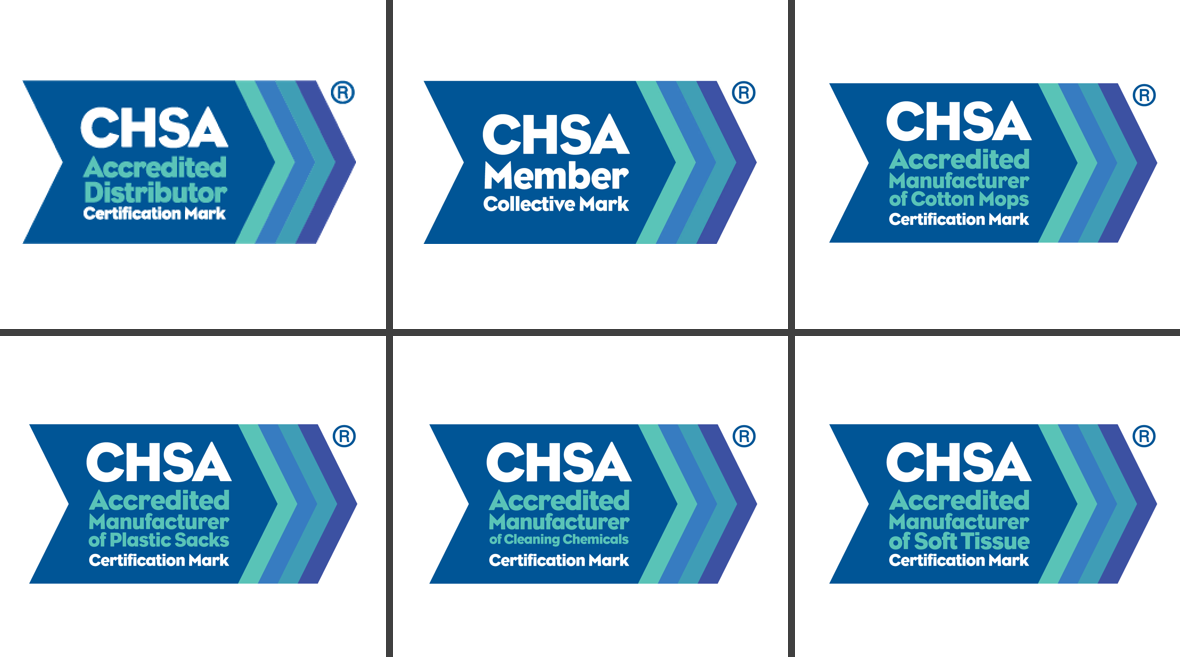
Within the cleaning and hygiene sector, this approach sits at the heart of the accreditation frameworks developed by the Cleaning & Hygiene Suppliers Association (CHSA). The CHSA’s Accreditation Schemes for distributors and for manufacturers of cleaning chemicals, plastic sacks, cotton mops and soft tissue are built on a simple principle: claims must be supported by evidence and verified independently.
Across these Schemes, product specifications are clearly defined and regularly checked through independent inspection and testing. Quantities, dimensions and performance claims must match what is delivered in practice. Environmental and ethical commitments are subject to scrutiny rather than assumption. For buyers and end users, this verification provides confidence that the products they purchase will perform as expected.
Third-party verification does more than protect buyers. It strengthens the entire supply chain. By ensuring that claims are credible and standards are consistently applied, accreditation restores transparency and enables fair comparison between products. Suppliers that maintain high standards are recognised for doing so, rather than being undercut by misleading claims or reduced specifications.
In an increasingly complex marketplace, trust cannot rest on declarations alone. It must be built on clear standards, credible evidence and independent verification. When these elements come together, buyers gain confidence, responsible suppliers are supported and the market works as it should.
Self-declaration may begin the conversation, but only third-party verification turns claims into guarantees.